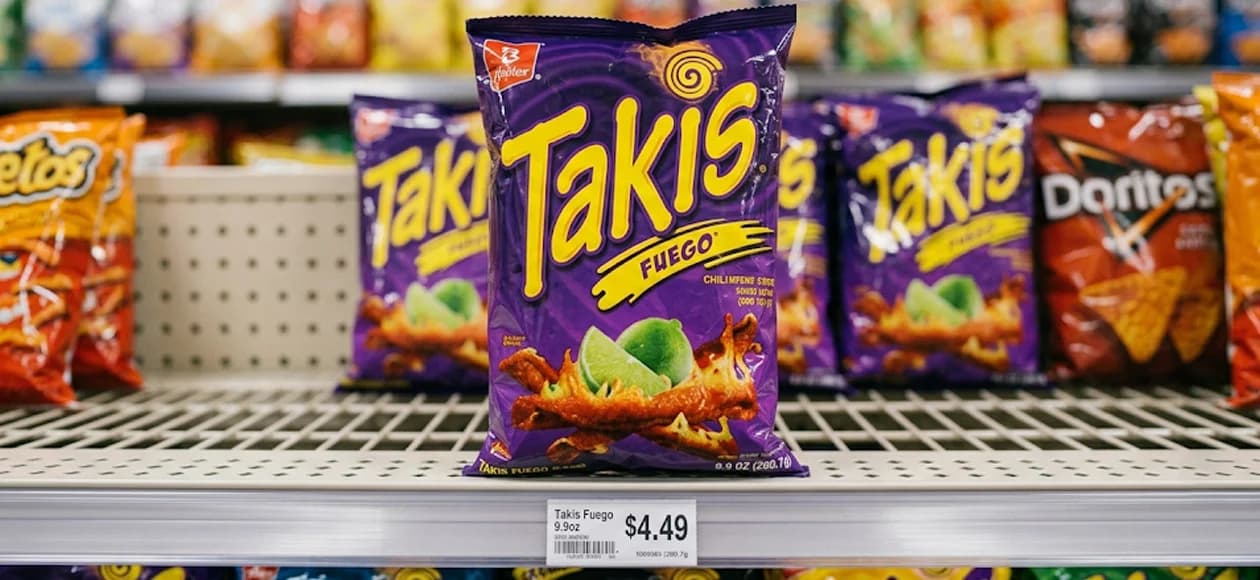
Takis don't hold halal certification from any recognised UK body either. The ingredient lists themselves are the only real evidence here, and flavour by flavour, they leave more open questions than a confident answer either way.

Dietary
Are Takis Halal in the UK? The Answer
In short
UK Takis don't list pork or alcohol, and most of the obviously haram additives are absent from the ingredients. Takis Fuego, the most widely stocked UK flavour, is the one to look at closely: some UK retailer listings show carmine (E120), a red colouring derived from the cochineal insect that most schools of Islamic jurisprudence treat as haram, while others show a plant-based colouring system with no carmine at all.
What makes a food halal or haram?
A food counts as haram under Islamic dietary law if it contains pork or pork derivatives, alcohol, blood, animals not slaughtered according to halal requirements, or carnivorous animals. Insects are more contested, and we cover that disagreement below. For manufactured crisps like Takis, the ingredients to check are pork-derived E-numbers, animal-based flavour enhancers, insect-derived colourings, and alcohol used as a carrier in artificial flavourings.
Do Takis contain pork or alcohol?
No. Pork gelatin (E441) isn't listed on any current UK Takis packaging, and the base ingredients – corn, vegetable oil, and seasoning blends – aren't pork-derived. Alcohol doesn't appear either, including as a flavouring carrier, which UK food law would require declared if it made a material contribution to the food. The more relevant question for UK Takis turns out to be an insect-derived additive, carmine, covered below.
Carmine (E120): the colouring that matters most, and why it's inconsistent
It depends which listing you check. Carmine (E120), sometimes labelled cochineal, is a red dye extracted from the crushed bodies of the cochineal insect, and most schools of Islamic jurisprudence treat it as haram.
UK and EU law requires a child hyperactivity warning on any product using Red 40 (Allura Red) or Yellow 6 (Sunset Yellow), the synthetic dyes used in US Takis Fuego. Barcel avoided that warning for the UK market by switching to paprika extract and carmine instead – at least for one version of the recipe.
Some current UK retailer listings for Takis Fuego still show carmine directly, alongside paprika extract, as one of the colours in the chilli and lime seasoning; we've cross-checked this against a UK-tagged listing on Open Food Facts.
Other current listings show a different colour system entirely: paprika extract plus beetroot, radish, apple, and blackcurrant concentrates, all plant-derived, with no carmine at all – a formulation that lines up with Takis Fuego as sold in EU markets.
That's not a small discrepancy – the two ingredient panels differ well beyond just the colouring, down to the flavour enhancers and emulsifiers used. Our best read is that this reflects a recipe change in progress rather than a data error on either side: Barcel opened a new UK factory in 2025 (see below), and the carmine-free version matches the EU market structure, while the carmine version may reflect older stock or a different supply line still in circulation.
We can't confirm which formulation is currently reaching most UK shelves, and we haven't been able to check a physical pack ourselves to settle it – if that transition is underway, the carmine concern may already be fading, but we can't confirm that from here.
Scholars don't agree on insect-derived ingredients generally. The Hanafi, Shafi'i, and Hanbali schools mostly treat consuming insects, and by extension carmine, as haram, based on the broader principle that "filthy or repulsive" things aren't food. The Maliki school is more permissive. A few contemporary scholars and certifying bodies argue that processing changes carmine enough to shift its status (an istihalah argument), though that's a minority view.
Given the uncertainty over which UK formulation is currently on shelf, the only reliable check is the bag in front of you: look at the colours line. If it lists carmine (or cochineal) and your practice treats insect-derived ingredients as haram, that bag doesn't meet your standard. If it lists only paprika extract and beetroot/vegetable concentrates, the colouring itself doesn't raise the same concern – though see the E631/E627 question below either way.
E631 and E627: the flavour-enhancer question
Beyond colourings, the other grey area is the flavour enhancers. Many E-numbers are entirely halal – synthetic or plant-derived. Some can be sourced from animals, including non-halal animals. The relevant ones in Takis' seasoning:
- E160c (Paprika extract) and E162 (Beetroot red) – plant-derived, halal.
- E133 (Brilliant Blue FCF) – used in Blue Heat. A synthetic coal tar dye, not animal-derived, and generally considered halal.
- E631 (Disodium inosinate) and E627 (Disodium guanylate): flavour enhancers that can be derived from fish, meat, or fermentation. Fish- and fermentation-derived versions are generally halal; versions derived from pork, or from meat not slaughtered according to halal method, would not be. UK packaging discloses the E-number but not the source, so there's no way to tell from the pack alone which production route was used.
E631 and E627 remain the key uncertainty for the savoury seasoning itself, on top of the unresolved carmine question in Fuego's colouring. Barcel UK hasn't publicly confirmed the source of these additives for their UK products. If you follow a strictly certified halal diet, this ambiguity, on top of the carmine uncertainty, makes Takis unsuitable without independent verification from the manufacturer.
Are UK Takis halal certified?
No. As of 2026, Takis don't carry certification from the Halal Food Authority (HFA) or any other recognised body operating in the UK. Certification requires a third-party audit of both ingredients and production processes. Barcel UK hasn't obtained it.
The UK entity behind the brand, Barcel Snacks UK Limited, was only incorporated in December 2023 – see our UK vs US Takis guide for more on how recently the UK side of this business has taken shape, including a new UK factory that opened in 2025.
The absence of certification isn't unusual – most major crisp brands in the UK aren't halal certified even where their ingredients don't obviously raise concerns. It means there's no independent verification either way.
We asked directly rather than assume. When we contacted Barcel's parent company in July 2026, Grupo Bimbo's Consumer Relations team replied by email: "Takis products are not Halal certified." The same reply added:
"Consumers with specific dietary or religious needs are encouraged to review the ingredient statement on the package."
Grupo Bimbo's Consumer Relations team, email, July 2026
Their reply didn't address carmine or any other specific ingredient, so it doesn't change the analysis above; it confirms the certification picture.
Cross-contamination
UK Takis are manufactured in facilities that also process milk and other allergens – Intense Nacho lists dairy directly as an ingredient. Milk itself isn't haram, but there's no disclosure about non-halal animal products in the wider manufacturing environment, which matters if you specifically require segregated halal production lines.
What do Muslims do with this in practice?
Practice varies considerably across the Muslim community. Some Muslims eat non-certified products as long as no clearly haram ingredient is listed – for Fuego specifically, that now means checking whether your bag lists carmine, since it isn't consistent. Flavours like Blue Heat, Dragon Sweet Chilli, or Volcano pass this test reliably; Fuego depends on which listing or batch you've got. Others require halal certification before eating any manufactured snack, in which case no current UK Takis flavour qualifies.
There's no single right answer here – it comes down to your own practice and your community's guidance. If you want a definitive read on a specific flavour, the Halal Food Authority is the body to contact directly, rather than relying on any third-party guide, including this one.
The verdict
No current UK Takis flavour is halal certified. Blue Heat, Dragon Sweet Chilli, Smokin' BBQ, Intense Nacho, and Volcano reliably avoid carmine based on current packaging, which puts them closer to acceptable if you allow non-certified products with no clearly haram colouring – though the E631/E627 uncertainty still applies to all of them, and Fuego needs checking flavour by flavour.
If you follow a strictly certified halal diet, none of the range meets that standard. Always check the bag in front of you rather than this guide alone; it reflects packaging reviewed in July 2026.
For other dietary questions about Takis, see our guides on whether Takis are vegan in the UK and whether Takis are gluten free. For the salt, saturated fat, and ultra-processed breakdown, see are Takis bad for you.
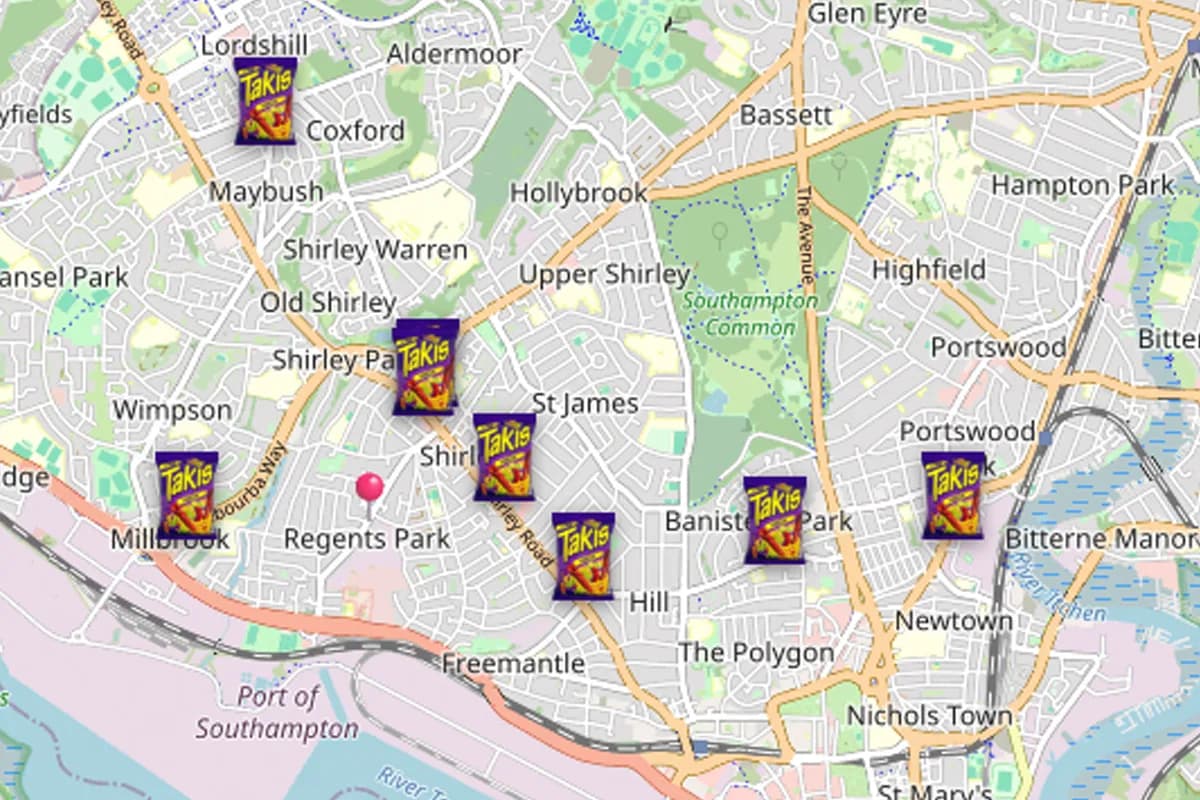
For more on why the UK recipe differs from the US original in the first place, see our UK vs US Takis guide. If you'd rather buy a bag you can check in person, use the Takis Near Me search tool to find your nearest stockist.
Frequently asked questions
Neither label fits cleanly. UK Takis don't contain pork or alcohol, which rules out the clearest haram markers, but nothing in the range is halal certified either. Fuego is the flavour to check yourself: some listings show carmine (E120), an insect-derived colouring most schools of Islamic jurisprudence treat as haram, while others don't. Without certification, it depends on your own standard and the specific bag in front of you.
Uncertain, and this is the one flavour where that matters most. UK retailer listings for Fuego disagree on whether it contains carmine (E120), an insect-derived red colouring most schools of Islamic jurisprudence consider haram – some show it, some show a plant-based colour system instead. Check the colours line on your own bag. No Takis flavour is halal certified regardless.
No UK Takis flavour carries halal certification, confirmed directly by Grupo Bimbo's Consumer Relations team. None list pork or alcohol, which removes the two clearest haram ingredients, but Fuego's inconsistent carmine (E120) and unconfirmed sourcing on E631/E627 mean even the ingredient list doesn't settle it cleanly. Blue Heat, Dragon Sweet Chilli, Smokin' BBQ, Intense Nacho, and Volcano avoid carmine on current UK packaging.
UK Takis don't list pork or alcohol in their ingredients, but they aren't certified halal by any recognised body in the UK. Some retailer listings for Takis Fuego show carmine (E120), an insect-derived colouring considered haram by most schools of Islamic jurisprudence; others show a plant-based colouring system instead, so this appears to vary by listing rather than being settled either way. Other E-numbers in the seasoning, including E631 (Disodium inosinate), can also be sourced from meat, and their exact source isn't specified on packaging. Whether Takis are suitable depends on your specific dietary practice, which flavour you're checking, and what the bag in front of you says.
No. Barcel Snacks UK hasn't obtained halal certification from the Halal Food Authority or any equivalent body. No UK Takis flavour carries a certified halal mark as of 2026 – confirmed directly by Grupo Bimbo's Consumer Relations team when we contacted them.
It depends which listing you check. Some UK retailers show carmine among Fuego's colours, alongside paprika extract; others show a plant-based paprika-and-beetroot colour system with no carmine at all. This looks like a recipe transition (Barcel opened a new UK factory in 2025) rather than a labelling mistake, but we can't confirm which version is currently on shelf. Carmine is derived from the cochineal insect, and the Hanafi, Shafi'i, and Hanbali schools of Islamic jurisprudence generally consider insect-derived ingredients haram, though the Maliki school takes a different view. If avoiding carmine matters to your practice, check the colours line on the bag you're holding.
Based on current UK packaging we checked, Takis Blue Heat, Dragon Sweet Chilli, Smokin' BBQ, Intense Nacho, and Volcano use plant-based colours – Brilliant Blue FCF with spirulina extract, beetroot red, or paprika extract with annatto bixin – rather than carmine. Fuego is the inconsistent one. Always check the ingredients list on the specific bag, as formulations can change.
It's one of the more straightforward flavours to check: current UK packaging shows no carmine, pork, or alcohol in Blue Heat's ingredients. It still isn't halal certified, like the rest of the range, so it comes down to your own standard rather than a certified guarantee.
ℹ Links marked “Ad” are Amazon affiliate links. As an Amazon Associate we earn from qualifying purchases, at no extra cost to you. See our Affiliate Disclosure for full details.